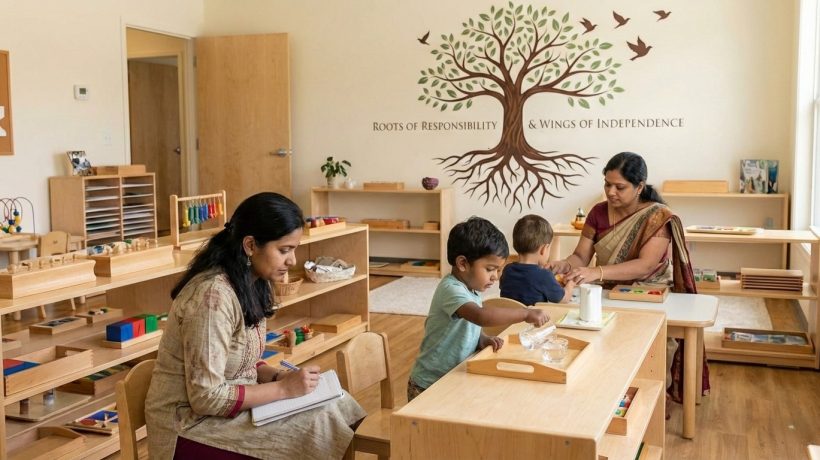
The greatest gifts we can give our children are the roots of responsibility and the wings of independence. – Dr. Maria Montessori
Choosing a school for your kid? Definitely, it’s one of the most important decisions you will make for your child. And when it comes to Montessori school admission, the deal goes far beyond infrastructure, popularity, and proximity. For many parents, admission season brings a mix of excitement and uncertainty. Many schools claim to offer the best Montessori experience, but how do you really know which one fits your child?
Montessori education is not just a teaching style, but a philosophy that shapes how children think, explore, and grow. Schools like Chitrakoota Montessori approach education with this deeper understanding, ensuring Montessori principles are reflected not just in words, but in everyday classroom practices.
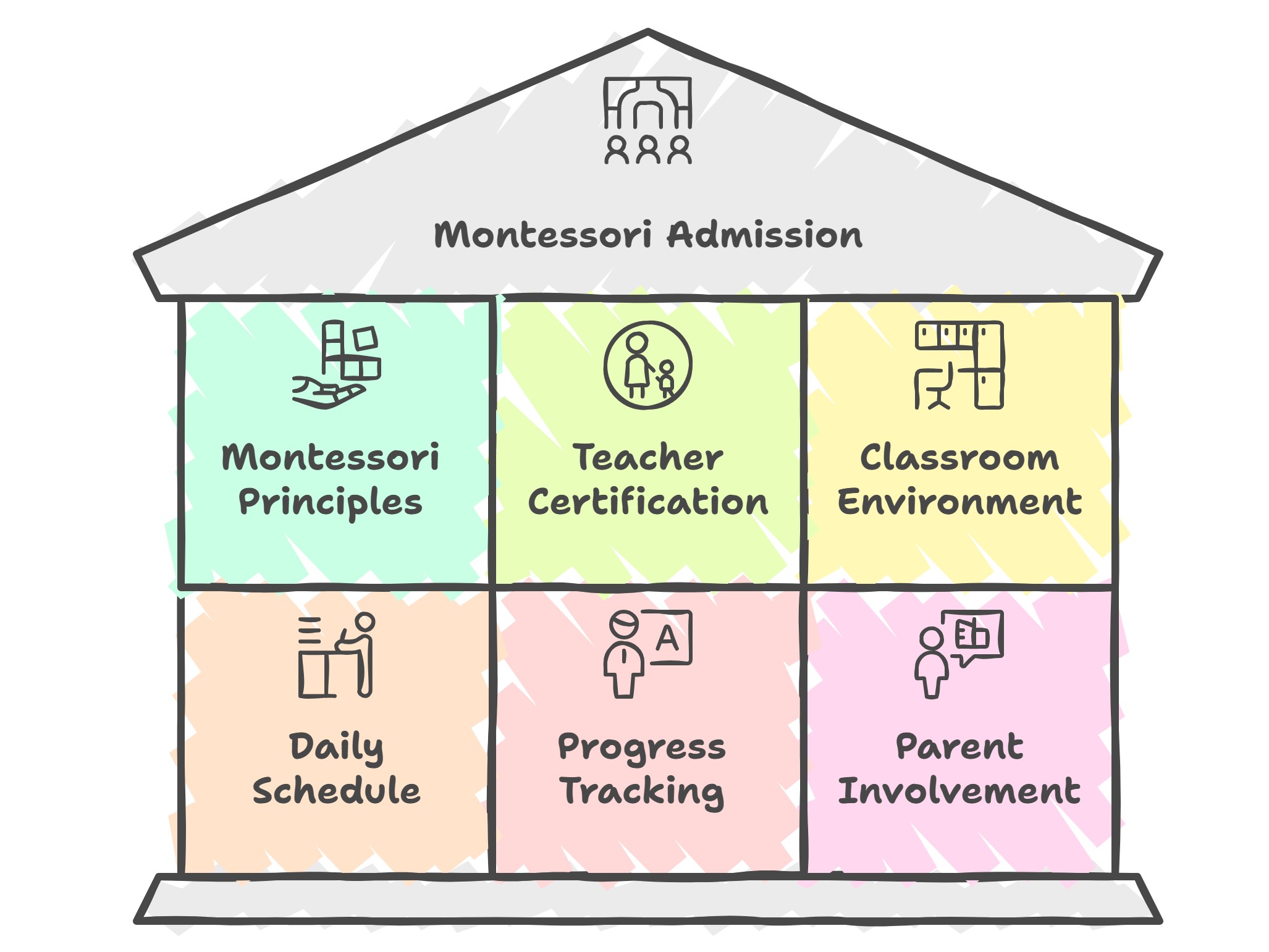
To make the right choice, you need a clear head, a sharp eye, and the right questions. This blog is curated to guide parents through a practical admission checklist, so you don’t just choose a Montessori school, but the right Montessori school for your child!
One of the most common mistakes that many parents make is assuming that all Montessori schools operate the same way. That’s not true. There is a significant gap between authentic Montessori schools and those that merely use the name.
Parents generally focus on visible factors like classrooms, activity lists, and academic outcomes. Of course, it matters, but the deeper elements like teaching philosophy, educator training, and how learning happens daily are also required to be considered. At Chitrakoota Montessori, Montessori principles guide every interaction, from classroom structure to the way educators observe and support each child’s growth.
Montessori philosophy works best when everyone sticks to its core principles. If you are missing these details, you may end up with a mismatch between expectations and experiences you hoped for. So let’s get started with what to look for when choosing the right Montessori for your little one.
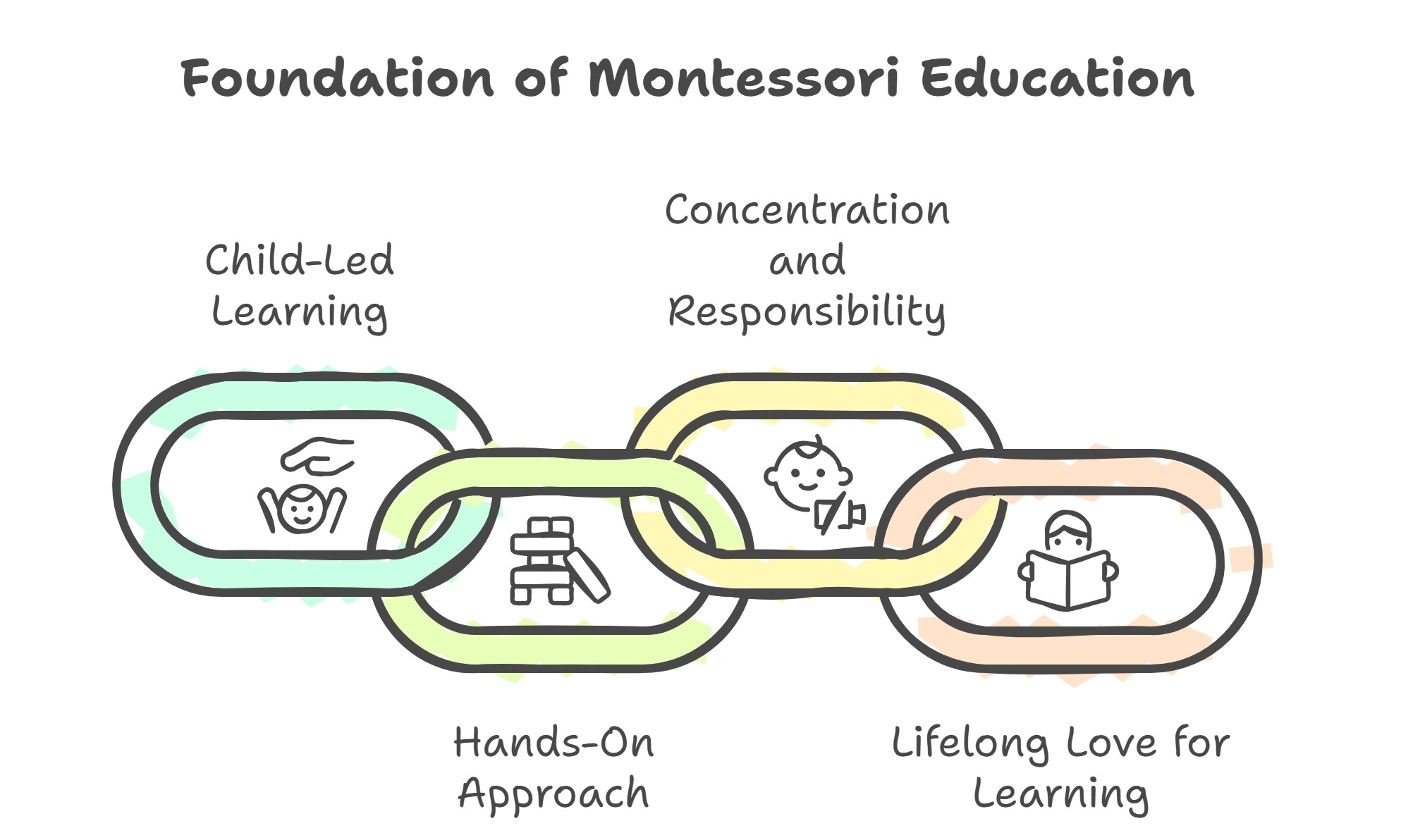
Before you dive into admission, take a minute to ensure you are clear about what Montessori education is and what the key benefits of Montessori education are. At its heart, Montessori education is a child-led, hands-on approach that supports every child’s natural pace of learning through self-directed activities, encouraging freedom of exploration.
Toddlers are free to choose their own work, learn things at their own pace through real experiences, and not rote memorization. The Montessori method focuses on developing concentration, responsibility, and a lifelong love for learning, rather than merely achieving academic milestones.
Once you really understand these benefits, you will be able to spot the difference between a true Montessori school and one that just uses the Montessori name but sticks to old-school teaching structure.
Authenticity really counts in Montessori education. A genuine Montessori school follows globally recognized principles and employs educators who are trained specifically in the Montessori method. Accreditation isn’t everything, but it shows that the school adheres to well-established Montessori standards.
During school visits or admission discussions, don’t hesitate to ask how Montessori principles are practiced daily. How are lessons introduced? How is progress observed? If the school staff explains its Montessori approach clearly and confidently, it’s a good sign that you are in the right place.
In Montessori classrooms, teachers are known as “guides,” and that is for a good reason. Their role is not to instruct children but to observe, support, and gently guide children towards learning. Montessori-trained educators know when to step in and when to let kids figure things out in their own way. They recognize each child’s unique way of learning and help them foster independence and confidence.
During the school tour, parents should notice how Montessori teachers speak to children. Are they calm and respectful? Do children feel comfortable approaching them? These small moments tell a lot about how your child will get the guidance every day.
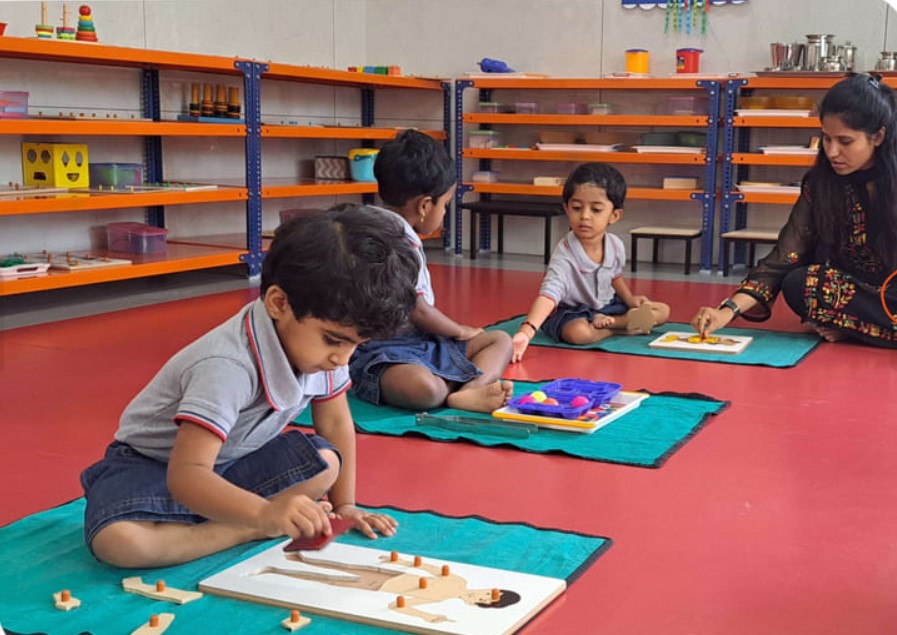
Walk into a Montessori classroom, and you will notice it’s calm, organized, and thoughtfully designed for children. All the Montessori materials are placed within easy reach, encouraging children nurture independence by getting what they want on their own.
In the Chitrakoota Montessori classroom, children move freely, pick Montessori activities that interest them, and work on them at their own pace. This makes learning and development meaningful and not rushed. Every shelf, mat, and material has a reason for being there.
When you are touring potential schools, take a good look at whether kids seem absorbed in what they are doing. Are they comfortable and confident navigating the space independently? A well-prepared Montessori environment supports curiosity and learning every single day.
Montessori education does not run on textbooks, worksheets, or rigid schedules. Instead, learning happens through a carefully structured curriculum that combines academics, practical life skills, sensorial exploration, extracurricular activities, and creative expressions.
One thing that sets it apart is the uninterrupted work cycle, which allows children to concentrate and deeply engage in the activities without constant interruption. Teachers observe and take notes to track progress rather than handing out tests. For parents, an important question to ask is how learning outcomes are tracked and how the curriculum evolves as the child grows.
Mixed-age classrooms are the hallmark of authentic Montessori education. Younger children learn by watching older peers, while older children build leadership, responsibility, and empathy. This natural peer learning structure is thoughtfully implemented at Chitrakoota Montessori to encourage collaboration instead of competition.
Class size also plays an important role. Smaller groups allow for more individual attention and meaningful peer interactions. Asking about age grouping and class structure during admission will provide parents with valuable clarity to make an informed decision.
A good Montessori school prioritises both physical and emotional safety. Classrooms should be clean, child-friendly, and designed to encourage individual learning. Emotional well-being is not an afterthought either. Montessori discipline focuses on guiding kids in a positive and respectful way instead of punishments.
Children should feel free to speak up, make mistakes, and learn from them. These elements help build resilience and confidence during early education years. Chitrakoota Montessori has a solid safety and monitoring mechanism supported by 24/7 security guards, CCTV cameras, anti-skid flooring, mosquito-proof campus, RO purified drinking water, well-trained lady helpers, etc., to ensure a safe and joyful educational journey in the school.

Open, honest communication goes a long way in building trust. An authentic Montessori school shares progress through observation and discussions, and keeps you in the loop with regular updates. You should know how feedback is shared, how often parent-teacher meetings occur, and how concerns are addressed.
Chitrakoota Montessori supports transparent communication, so that it’s easier for you to stay involved and actually feel like a part of your child’s learning journey.
Sure, the school’s philosophy and teaching style matter most, but practical factors are also important in making Montessori school admission work smoothly for your family. A school that is reasonably close to home reduces daily travel stress and helps your kid start and end the day calmly. School timings and schedule flexibility are also key factors to consider if you are working parents managing routines.
Check out things like extended care, transportation facilities, and holiday calendars, so that you are not caught off guard. However, convenience alone should not drive the decision. The goal is to find a balance where daily logistics support does not disrupt your child’s learning experience.
With multiple locations across RPC Layout, Nagadevanahalli, and Kengeri Ring Road, Chitrakoota Montessori offers parents flexibility without compromising on Montessori authenticity. Plus, a school bus facility is also available to ease the commute between home and the school campus for kids.
Think of Montessori education as an investment in your child’s overall development. Fee structure varies based on the school. It usually reflects specialized materials, trained educators, and low student-to-teacher ratios.
Rather than comparing costs, you should consider the long-term value your child gets: confidence, independence, problem-solving skills, and a genuine love for learning. Clear conversation around the fee structure will help in selecting a Montessori school with clarity and confidence.
Finding a school that provides authentic Montessori education can make all the difference. Chitrakoota Montessori is the best Montessori school in Bangalore, rooted in child-led learning, prepared environments, and trained Montessori educators who guide every child with care and intention. It adheres to the elements of Montessori, including strike order, authenticity, minimalism, and approachability, every time while engaging with the children.
The spacious campus is designed to let children engage in the activities and grow confidently at their own pace. Our experienced Montessori educators keep constant observation of all the activities that children are involved in, like playing theatre, singing rhymes, dancing, art, exercise, swimming, or whatever interests them.
Chitrakoota views admission as a collaborative journey with parents. Through observation-based interactions and transparent communication, it keeps parents updated on their child’s Montessori education journey. Feel free to schedule a school tour or contact us for Montessori school admission-related queries.
Honestly, choosing a Montessori school is not about finding perfection; it’s about finding alignment. When you take the time to understand Montessori education, observe classrooms, ask questions that really matter, and trust your instincts, admission decisions become clearer and more confident.
An authentic Montessori school nurtures curiosity, independence, and a lifelong love for learning. Schools like Chitrakoota Montessori perfectly demonstrate how Montessori principles can be thoughtfully implemented every day, fostering lifelong love for learning from an early age.
With clarity, patience, and the right checklist, you are now ready to move forward with confidence and choose a Montessori school where your child truly thrives. Your little ones’ Montessori journey awaits!