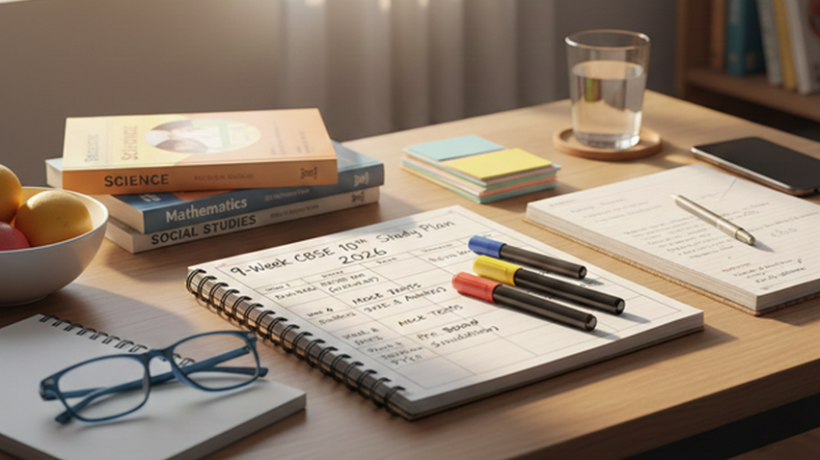
Preparing for your Class 10 CBSE board exams may feel like a lot. Juggling schoolwork, assignments, and expectations from all sides? It’s no wonder that students may feel overwhelmed. But the truth is: you don’t need long, stressful hours or slog through endless reference books. What you really need is a structured, realistic, and practical study plan for class 10 CBSE board exams that helps you study smart, not just hard.
That’s where this 9-week study plan comes in to help you build a steady revision habit, squeeze in plenty of practice, and walk into the exam hall with confidence. Whether you think you are ahead, falling behind, or stuck somewhere in between, this plan helps you make every week count and boost your performance.
Nine weeks is that sweet spot which is long enough to go through the whole syllabus rapidly, practice papers rigorously, strengthen the weak areas to build exam confidence, and short enough to avoid loss of motivation halfway through. Many students say that they spend hours studying, but still don’t get anywhere. And you know what the big issue is here? It’s a lack of structure.
Here’s what this 9-week class 10 study time table gives you:
With this approach, you will hit revision and practice at the right pace. By the time you are tackling mock tests, you already have conceptual clarity and steady writing practice. Trust the process, and you will be ready when the real exams roll around.

Before starting with this study plan for class 10 CBSE board exams:
This plan moves with a purpose each week. It works as an effective study strategy when followed consistently. You will start by understanding the basics, then practicing, building strength, testing yourself, and finally, revising everything you have learned. Feel free to customize this plan based on your school routine or blend it with your own self-study timetable for class 10.
Start by truly understanding the concepts. Don’t just memorize; make sense of what you are learning. Go over the most important chapters of Maths, Science, and SST, since they carry more weight in exams. Read through your Language chapters, both prose and poetry, to refresh your brain.
Each day, practice 10 to 15 basic questions for every subject. Think of this week as your foundation; it sets you up for the rest of the plan.
With the basics sorted, it’s time to dig deeper. For Maths, focus on Algebra, Triangles, and Coordinate Geometry. In Science, tackle Life Processes, Chemical Reactions, and Electricity. For SST, give attention to Civics and Geography. Mark important in-text NCERT questions; they can save you later.
Also, start writing short notes for those last-minute revisions. Doing all this sharpens your understanding and makes you feel more confident about your subjects.
This is the week to start getting your hands dirty. Solve descriptive questions for Social science and English. Work through the numericals and drawing diagrams in Science. Push yourself with timed Maths practice to build speed. Use flashcards or quiz yourself for active recall.
By the end of the week, you will notice you can answer faster and more accurately.
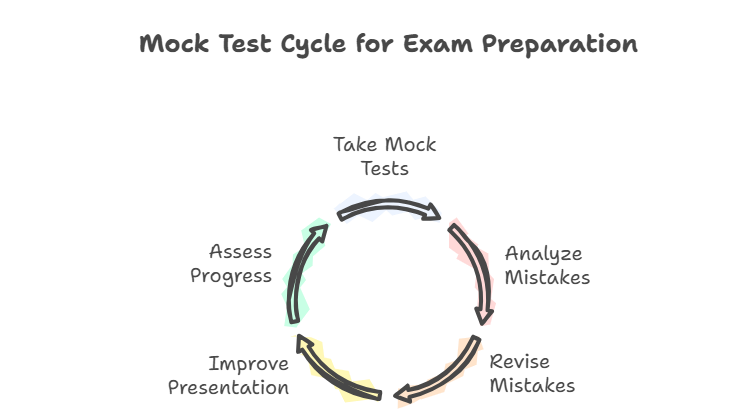
Now is the time to test your preparation. Take 2-3 mock tests and make sure you attempt them in exam-like conditions. Mock tests will also help you adjust to the expected pattern under the CBSE exam policy changes 2026 for Class 10. After each test, analyze mistakes carefully and write them down in your mistakes notebook. Revise it regularly, and trust me, this will have a big hand in your exam success. Pay attention to your writing speed, handwriting, and how your answer looks on the page, which means presentation.
This mock test week will show you where exactly you stand after 28 days of hard work.
This week can change everything if you use it well. Want to score high in CBSE class 10 exams? Make this week a highly productive week. Identify the topics or subjects that cost you marks. Practice more and more questions from those chapters. Rewatch the videos or ask your teacher if you have any doubts. Brush up on those tricky formulas, maps, and grammar rules.
Fixing your weak spots now saves you from making the same mistakes in the board exam.
It’s time to step it up, switch from basics to advanced prep. Solve previous years’ questions (PYQs) and practice CBSE sample papers based on the latest CBSE Class 10 exam pattern for 2025-26. Sharpen the way you write answers, especially for English and Social Science. For Maths, aim for solving 30 to 40 medium-difficulty questions each day.
This week gets you comfortable with the latest exam pattern and really sharpens your accuracy.
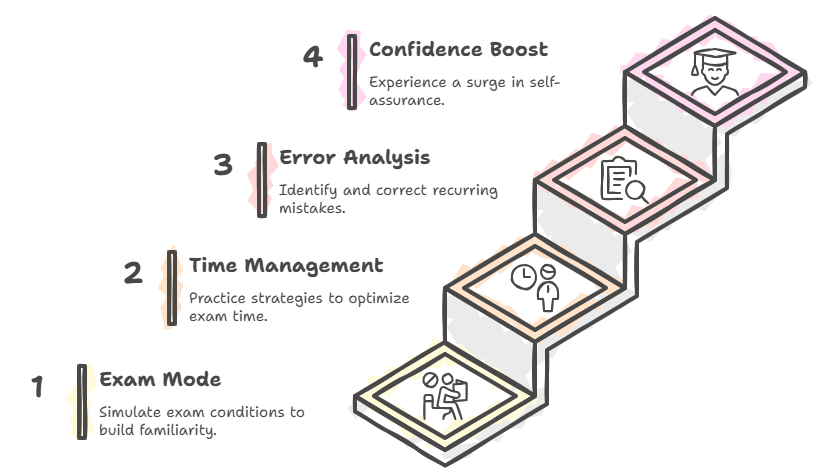
Go full-on exam mode this week. Attempt one mock test every alternate day with the feeling or mindset that you are attempting your class 10 board exam 2026. Ensure effective time management by attempting easy questions first or whatever strategy works for you the best. Check your mistakes in every question paper. Notice any patterns in where you slip up and fix them right away.
This is when your confidence really starts to take off for the CBSE class 10th exam.
And here comes the revision week! Keep your regular revision light but effective. Go through the short notes, summaries, and formula sheets. Don’t forget to flip through your mistake notebook; you will thank yourself later for this. Practice diagrams, maps, and writing formats. Only revisit the chapters you still struggle with; don’t waste time on what you already know. Keep 3-4 hours for revision a day, and you will not need tips to score high in CBSE class 10 board exams if you honestly do it.
The purpose of this week? To help your brain strengthen memory recall.
Finally, the last week arrives. This final week is all about stimulating the real exam. Avoid learning new topics during this time. Every day, sit and solve one 3-hour paper. Maintain proper sleep and eating habits. Before going to bed, do a light revision. Don’t overload yourself.
By the end of this week, you will actually feel ready for your board exams, and this is what makes it the best study timetable for class 10.
If you are making a daily timetable for class 10, don’t just cram in study hours; include some healthy habits too. These little habits will help you stay calm and focused throughout your exam prep journey.
These small habits might not seem like much, but they make a huge difference by helping with stress and anxiety management and having effective study hours in a daily routine.

Here are some common mistakes that you can dodge if you plan to score higher in your CBSE 10th exams:
Believe me, avoiding these mistakes will help you improve your score drastically.
At Chitrakoota, we understand that there’s more to board examinations than just slogging through the CBSE Class 10 syllabus 2025-26. It’s about studying smart, not just hard. Our learning environment is built to help students lay strong foundations, pick up consistent study habits, and approach exams with confidence.
Our teachers guide through concept clarity, regular assessment, smart study strategies, and personalized feedback to ensure every student stays aligned with a structured study plan for Class 10 CBSE Board exams. But it’s not all about marks!
As one of the best CBSE schools in Bangalore, Chitrakoota also emphasizes emotional well-being, time management, and balanced routines to help students beyond academic support. With the right guidance and supportive ecosystem, students here get everything to give their best in the Class 10 CBSE board exam with self-belief and readiness.
Preparing for Class 10 board exams doesn’t have to be stressful. With the right structure, consistency, and solid plan, you can easily make the most of the time you have. This 9-week plan is actually doable, easy to follow, and designed to help you study effectively without burning out. Take it week by week, stay calm, and trust your preparation.
Best of luck for your CBSE Class 10 board exams 2026. Remember, you have it in you!
Morning is an ideal time to study for most students, especially for theory subjects. But the best time depends on your energy levels. Choose what suits you the best, have fixed study slots, and make your class 10 study time table accordingly.
Follow a structured study plan for class 10 CBSE board exams. First month focus on revision and practicing subject-wise CBSE questions. Second month dive into full mock tests + targeted revision. Stay consistent, keep up the effort, stick to limited resources, and make maximum revisions to be prepared for your class 10 board exams effectively.
If you follow a strict study routine focusing on multiple NCERT revisions, subject-based daily practice, and timed full-length mock tests, you can definitely achieve your aim. Many students have managed to do it with discipline and determination, so you can too. However, it’s always better to start the prep early if you have time.