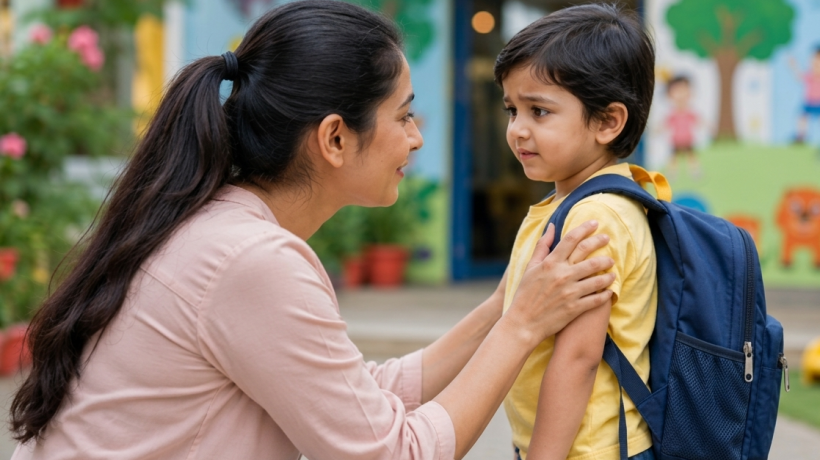
The tiny backpack is packed, the water bottle is filled, and the shoes are neatly tied. But as the school gates come closer, little fingers suddenly tighten around your hand, and teary eyes silently ask, do I really have to go?
The first day of preschool is an emotional milestone filled with excitement, nervousness, and uncertainty. While parents dream about their child’s new beginning, preschoolers often see it as their first big separation from the comfort of home.
But you know, the first-day school anxiety is completely normal. Whether your child cries at drop-off or refuses to wear their uniform, all these emotions are simply part of adjusting to a new environment. With a bit of patience, preparation, and emotional support, you can make this transition smoother for both children and yourself.
This lovely guide walks you through understanding preschool anxiety and how to help your child face their first days with calm and reassurance. Let’s make those tough mornings a little easier for both of you!
Starting preschool is a huge change for a young child. Up until now, their whole world has probably been home, a cozy place where they know everyone and every routine. Then suddenly, they are expected to walk into a whole new environment. This can feel overwhelming to little preschoolers.
But hey, separation anxiety is a natural emotional response when children are away from their parents or caregivers. Preschoolers are still developing emotional independence, so unfamiliar places and new faces can initially feel scary.
Parents experience anxiety, too. Watching your child cry at the classroom door can trigger guilt, worry, and self-doubt. That’s normal. This phase is not a parenting failure. It is simply that kids need time to adjust, and their big emotions are just part of getting used to something new.
The best way to reduce first-day anxiety is to make school feel familiar before it even starts. Here are some amazing ways you can try:
Start introducing the idea of school weeks before the first day. Talk about it with warmth and excitement instead of pressure. You can say things to your child like: You’ll get to play with new toys, your teacher will read fun stories, and you might make new friends.
A school environment feels less intimidating when children have already seen it once before. If possible, take your child to explore classrooms, meet teachers, see the play area, and locate washrooms and snack areas. This familiarity helps children feel safer on the actual first day of school.
A sudden shift in routine can increase stress. Begin adjusting sleep schedules and morning habits at least one to two weeks before school starts. Get into the rhythm of waking up earlier, eating breakfast on time, and getting dressed on their own. These little habits help kids easily adapt to a new schooling environment with confidence.
Picture books or story books are magic when it comes to helping kids understand their feelings. Stories about other kids starting school let them see that feeling nervous is normal and doesn’t last forever. Plus, reading together gives your child a chance to talk about how they really feel.
The first few school days are less about academics and more about emotional adjustment. Here’s how you can make things comfortable for you and your child.
If your kid is nervous, don’t brush it off or tell them not to worry. Just let them know you get it. Say things like: I know this feels new, it’s okay to miss home or you’re learning something brave. When kids hear you understand, they feel safer. It goes a long way.
Many parents stay too long, hoping to comfort their child, but extended goodbyes often increase anxiety. Keep a simple goodbye ritual: just one hug, one smile, one reassuring or encouraging sentence, and then leave confidently. Children usually calm down much faster once parents leave.
Children mirror parental emotions. If you appear anxious or guilty, children may feel more uncertain. So, just take a deep breath, trust the teachers, and remember lots of kids cry at drop-off. It’s just part of getting used to something new.
A child’s first school experience becomes much easier when the environment feels warm, nurturing, and emotionally supportive. That’s what Chitrakoota Montessori School aims for to ensure children feel secure, welcomed, and emotionally comfortable from the very beginning.
Kids adjust better when classrooms feel friendly and inviting. Supportive teacher interactions, gentle encouragement, and playful learning spaces at Chitrakoota Montessori School help children settle naturally into their new routine.
Children often express emotions better through creativity. Activities like storytelling, music, dance, art, rhymes, interactive play, etc., allow preschoolers to communicate, explore, and connect with confidence.
Chitrakoota Montessori School understands how emotional those first days can be. They don’t rush kids; they let students slowly adjust through engaging classroom activities, playful interaction, and gradual social exposure, which helps children to view school as a happy and safe space rather than an unfamiliar one.
Preschool isn’t just about ABCs and 123… It’s where kids also learn independence, communication, social interaction, emotional resilience, and friendship. With the right guidance and environment, first-day anxiety slowly transforms into curiosity, confidence, and excitement.
To make the transition smoother for both parents and children, the school also conducts orientation programs for preschool families. These sessions help parents understand how Montessori learning works and how they can support their child during the initial school days. Plus, children receive Montessori activity kits to explore at home with their parents and get familiar with learning materials.
Even with the best intentions, certain reactions can unintentionally increase anxiety.
Leaving secretly may stop immediate crying, but it can create fear and mistrust later. It’s always better to say goodbye in a calm, clear way to let them know you are leaving and that you’ll be back.
Don’t compare your child to others. Saying things like: Look, the other children aren’t crying, only makes your child feel embarrassed or emotionally unsupported. Every kid has their own way of handling new situations. Let them adjust at their own pace.
Never say to your kid, “If you don’t behave, I’ll send you to school.” Such phrases can create negative associations with learning environments. Kids should feel good about going to school instead of being scared of it.
The first day of preschool can feel overwhelming for both children and parents. Those emotional goodbyes, nervous tears, and hesitant steps into the classroom are all part of a child’s journey.
You can prepare your kid for going to school before it begins by casually chatting positively about school, introducing school stories through picture books, visiting school beforehand, and practicing a school-like routine to make the transition easier. As a parent, you need to validate your kid’s feelings and stay composed even if your child cries at drop-off. Don’t avoid goodbye, but don’t stay for a long farewell.
For families in Bangalore, choosing a supportive preschool environment can make a big difference. Connect with Chitrakoota Montessori School to enroll your child in the best preschool in Bangalore.
Because today’s tearful goodbye at the school gate often becomes tomorrow’s excited wave before running into class.
You are also warmly invited to attend the Montessori Exhibition on 31st May, 2026 and experience the joy of Montessori learning firsthand. The exhibition is open to parents, children, aspiring Montessori teachers, families exploring preschool options and anyone interested in Montessori education. Happy Preschooling!