Do you remember the stressful days before board exams? There are long hours of studying and pressure to do better than everyone else. And there’s always the fear that one exam could decide your future. As parents and students in India, we all feel this way. But what if we could change this? What if we could turn exams from something scary into a chance for deeper learning?
The good news is that change is coming! The Central Board of Secondary Education (CBSE) has suggested a new two-level board examination system. This plan aims to lower exam stress and support a better way of learning at its exam centres. Sanyam Bhardwaj, the Controller of Examinations, shared this information. This major change comes from the New Education Policy 2020 and has the potential to change education in India.
This new system is designed to help students. Instead of taking one big exam, they will have two opportunities to show what they know. The first exam will happen in February 2026, and the second will be in May 2026. This change isn’t just about having another chance. It’s also about making learning easier and creating a good place to learn.
This new plan by the CBSE is a big change from the old exam-focused method. It focuses more on constant learning and development instead of just doing well on one test. By giving students two opportunities to show what they know, the board is making education more welcoming and helpful. This move towards overall development should reduce the stress exams put on students and help them connect better with what they learn. As we accept this new way, we can hope for a future where education is not just about passing tests but about raising smart thinkers and lifelong learners.
Students have the choice to take tests in all subjects or focus on just a few in each round. This helps so that any tough subject does not affect the whole exam experience.
Second Chances, Real Improvements: Did you not do as well as you wanted in the first round? That’s okay! A second try lets you work on the areas that need help and try for a better score.
This system doesn’t fit everyone in the same way. It is made to help students who learn in different ways and have different goals.
For the High Achievers: Are you trying to reach the top ranks? The two-tier system helps you improve your scores. You can aim for excellence without worrying about making one mistake.
For Those Who Need More Time: Some students do well under pressure, while others need a bit more time to do their best. This system understands that and helps students go at their own speed. This way, everyone gets a fair chance to succeed.
“Adapt, Evolve and Excel – Embrace change with Confidence”
The importance of this proposal goes beyond just logistics. It shows a major change in how education is viewed in India. For too long, tests like the JEE and NEET have been the main focus of education. This has affected private candidates too. It has created a culture of memorization and put a lot of pressure on students. This new system aims to change that.
The new two-tier exam system proposed by CBSE is not just a change in the exam pattern. It is meant to create a better and more effective learning experience for every student in India. This system aims to remove unfair means during examinations. The goal of this change is to inspire curiosity and deeper understanding, making learners who will use important skills throughout their lives. The two-tier system gives students extra chances to do well in difficult subjects. This is a big step towards a more complete learning experience. It’s not only about the exams, but also about changing education in India for a better future. We want learners to feel confident and hopeful.
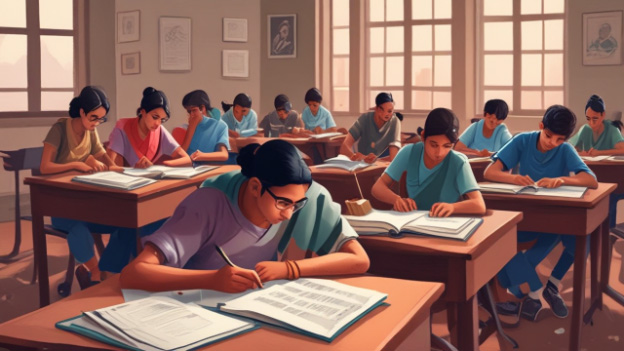
The new CBSE rules for the 10th Board Exam in India bring a big change in education. They aim to reduce rote learning and the stress that comes from exams. A two-tier system is being put in place. This lowers the importance of a single exam. With this, students can focus on learning and dive deeper into the subjects in the current syllabus. This change is good for building curiosity and helps students understand concepts better. It also prepares them to be lifelong learners who can think critically and solve problems. Although some details are still being worked out, the possible benefits of this new system are clear.
The final details are still being worked on, but the possible impact is clear. Parents and students need to accept this change. We should promote a love for learning at home and in schools.
Let’s hope for a future where education focuses on growth, exploration, and reaching our full potential. Together, we can turn this vision into a reality.
Keep in mind: The CBSE is currently reviewing this proposal, and the implementation details may evolve. Stay tuned to official announcements from the CBSE for the most up-to-date information.
The new CBSE rules for the 10th Board Exam in India have several changes. They will ask fewer descriptive questions and more objective-type questions. There will also be new choices for internal assessments in sections that carry more weight, including practical exams. These changes are meant to lower exam stress and support overall learning.
The new CBSE rules for the 10th Board Exam in India aim to help students feel less stressed. They plan to do this by creating a better way to assess students. The changes include having fewer big exams. There will be more focus on internal assessments. Students will also have options to choose subjects that match their interests and strengths.
Yes, the new CBSE rules for 10th Board Exam in India have introduced a major change in the evaluation system by making the Board exams mandatory for all subjects. This means that internal assessments will no longer be considered for 10th-grade students in CBSE schools in India.