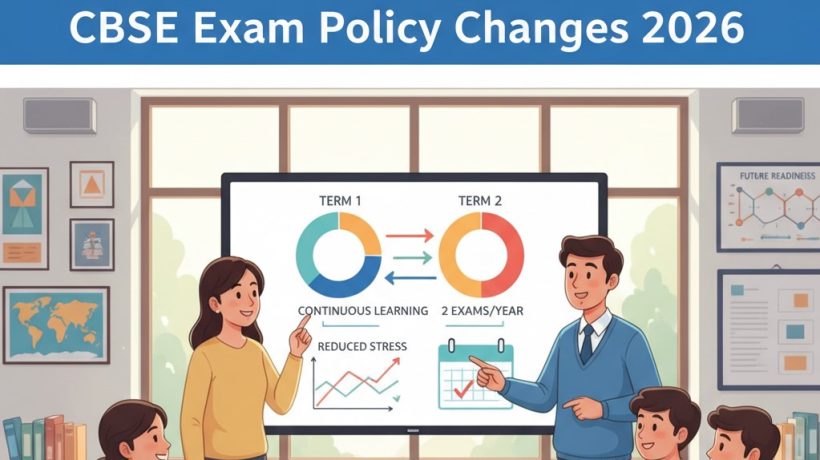
Board exams are entering a new era. CBSE is flipping the script in 2026, giving students one more chance, less pressure, and a whole new way to show what they know! The aim behind the CBSE’s new rules is to make learning less stressful and more meaningful. The CBSE exam policy changes 2026 for class 10 redefine the way students will be tested.
For teachers, it’s a call to adapt the classroom for deeper learning and overall growth of the students. For parents, it’s the reminder that their support matters more than ever in the transition. In this blog post, we will walk you through CBSE exam rule changes 2026, what’s new, and how everyone can prepare for this new academic landscape. Let’s get started!
Before learning about the changes, let’s understand the driving force behind them. It’s something we’re all aware of – The National Education Policy 2020! The CBSE new guidelines have come to life following NEP 2020’s vision, which pushes for a more flexible, skills-focused school system. CBSE aims to replace rote-learning and those high-pressure, one-shot board exams with a continuous, student-friendly way of assessment.
So, when we talk about “CBSE exam rule changes 2026” or “CBSE board new rules,” we are talking about a real shift, which is not just about chasing marks anymore. The focus is on understanding, flexibility, and giving students a fair shot. For parents and teachers, it’s not just about grades anymore; it’s about helping kids actually learn.
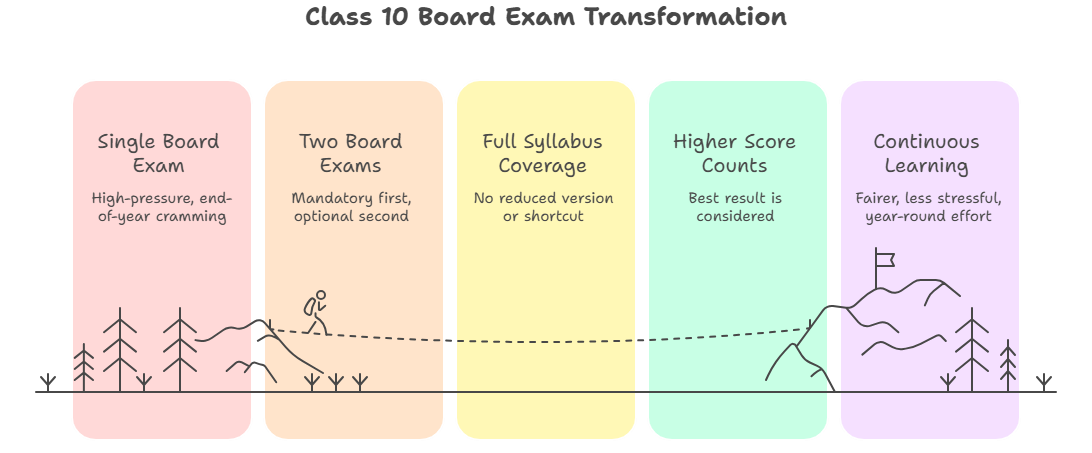
Here’s what’s changing for Class 10 based on CBSE’s new guidelines:
These are the major changes. Students will get a second chance in the same year for the class 10 CBSE board exam, which takes some pressure off and feels a lot fairer. But it also means kids need to stay on track all year, no more cramming at the last minute.
Also note that students have to appear for at least 3 subjects in the first board exam to qualify for the second or optional board exam. In the second board exam, students are eligible to appear for a maximum of three subjects to improve their performance. The result of the Class X first board exam will be declared in April, and the second exam results will be released in June as per the new CBSE guidelines.
Keep a regular check on CBSE’s official website and the school noticeboard for further guidelines or updates.
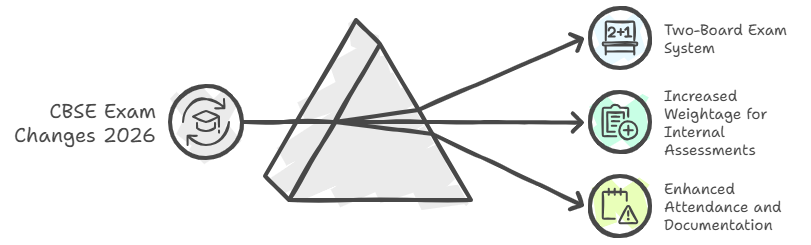
Let’s take a quick glimpse of CBSE Board exam changes 2026 and how they differ from the current model:
Overall, this evolution makes the education system move toward being more student-friendly. But for this to work, teachers, parents, and schools all need to stay in sync and on top of the changes.
Teachers are the heart of making this reform work. With the updates to CBSE guidelines for class 10, you’ll need to rethink your lesson plans. Create it in the new term-wise format, integrate meaningful internal assessments, and conduct mock boards that actually match the new two-phase exam schedule.
Shift the focus. Move away from just last-moment board exam prep. Teach through activities, get students working on projects, and make sure regular assessment is part of the routine. Concepts matter more than cramming. You’ll need to stay on top of attendance documentation, internal assessment records, and keep parents in the loop. Accurate data is the foundation of new eligibility rules and the second-window exam option.
Professional development isn’t optional now to adapt to CBSE’s new rules or CBSE exam policy changes 2026. Don’t wait for things to happen, prepare for them. If you are ready for these shifts, you’ll guide your students effectively and adapt to the new system seamlessly.
Parents, your role becomes more important in this educational transition. As you are now clear about the CBSE Exam policy changes 2026 for class 10, there are several ways you can help your child adapt to the new system. Encourage your child to stick with consistent learning habits. Sure, there’s a second chance for the CBSE Class 10 board exams, but it will be helpful only if they keep working throughout the year.
Don’t chase marks. The system now values understanding and continuous assessment. When you focus on real learning, the benefits last way beyond boards. Stay on top of school updates like assessment schedules, mock exams, attendance, or second exam windows. Lastly, support your child’s mental health. The second exam isn’t a shortcut; they still need to prepare all year. Balance matters.
With your involvement, the CBSE board’s new rules will feel more like an opportunity for your child to grow.
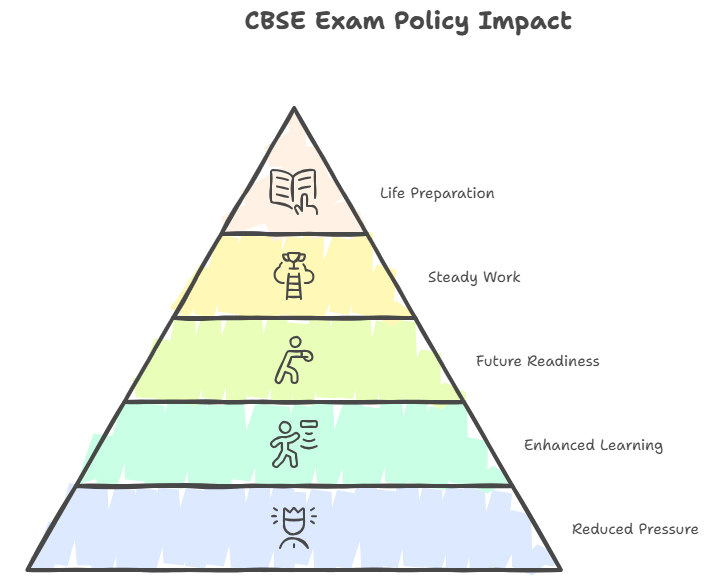
For students, the CBSE exam rule changes 2026 bring both promise and challenges:
Promise: CBSE Class 10 students get board exams twice a year, which lowers the pressure. There’s more time in school to actually learn and connect the dots, and it lines up better with what comes next, college or skills training.
Challenge: The syllabus remains full. That second exam in May is for improvement, not an easier ride. Internal assessments and showing up for class matter a lot more now.
If you keep working steadily, the new system rewards you. Relying on cramming at the last minute? That’s going to be tough.
In the end, these changes are about more than just passing exams; they are meant to get you ready for life, not just the next test.
At Chiratkoota, as a top CBSE school in Bangalore, we have already started shifting gears to match up with the new CBSE exam rules. We have scheduled two mock board examinations for our Class 10 cohort. This matches CBSE’s new plan for two board exams a year and ensures students are well-prepared for the new exam pattern. Our teachers are stepping up, too. We are running special training sessions focused on competency-based assessments and project work, so everyone’s ready for the new way CBSE wants to evaluate students.
Parents are also in the loop. We are holding regular workshops to explain the CBSE Board exam changes 2026, new attendance rules, and what internal assessments really mean for their kids. Our academic calendar has been reorganised into term structures to better distribute lectures, assessments, and revision in line with the new CBSE rules.
At the end, our goal is to ensure our students are confident, well-prepared, and supported, not overwhelmed by change.
The new CBSE exam policy 2026 marks a meaningful shift in India’s school education assessment system. For Class 10, two board exams a year give students more flexibility and a fairer shot. Everyone, including teachers, parents, and students, has a crucial role to play and must adapt to the changes effectively. With consistent efforts and proactive preparation, the CBSE’s new rules can lead to less stress, better results, and deeper learning.
Let’s take on the change as one team with clear heads, open communication, and a positive attitude!
CBSE will now hold two board exams a year for Class 10, the first is mandatory and the second is optional. You will also see stricter attendance rules (at least 75%) and more weight on internal assessments.
Yes. There will be two board exams starting from 2026, which will be held in February and May, respectively. This new two-window exam system aims to reduce exam stress and propose meaningful learning.
No. Only the first board exam in February is compulsory for all class 10 students. Students can take the second exam for improvement or compartment under the new policy. Students failing to appear in at least 3 subjects during the first exam cannot appear in the optional or the may exam. They will be marked as essential repeats and have to reappear next year.